Marie Curie was born in Warsaw (Poland) on November 7, 1867. In 1894 she met Pierre Curie, whom he married in 1895. Always
was interested in the discoveries that were made for her years on new types of radiation. Marie began studying uranium radiations, and using piezoelectric techniques devised by her husband, carefully measured the radiation from pitchblende (containing uranium ore), realized that I had to unknown elements, even more radioactive than uranium .
marriage in 1898 announced the discovery of two new elements: polonium (Marie was given its name in honor of his native Poland) and radium. during the next four years the Curies worked in very poor conditions they treated atonelada pitchblende, which isolated a radio fraction of a gram. In 1903 he received the Nobel Prize in physics for the discovery of radioactive elements. Marie Curie became the first woman to receive a Nobel.
In 1911 he received a second Nobel, an unprecedented event. This time it was the chemistry, for her work on radium and its compounds. He was named director of the Institute of Radio Paris in 1914 and founded the Institute Curie.
Marie Curie suffered from pernicious anemia caused by long exposure to radiation. He died on July 4, 1934 in the Haute Savoie.
What are the uses of nuclear power today?
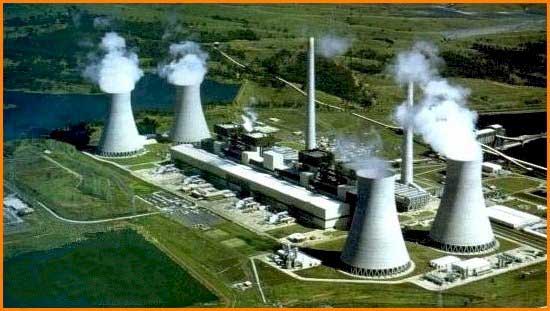
Currently nuclear energy has many uses, from medicine to weapons of war. The most common uses of nuclear energy are civilians, both to generate the electricity we use in our homes and industry and for medical and research uses.
The best known use is to generate electricity in nuclear power plants, after X-rays followed both in the field of medicine and construction, dating carbon 14 dating archaeological permits, radiation used to treat cancer Building
the destructive action of radiation on the matter, the radioisotopes used in medicine in cancer treatment, radiating with cobalt-60 tumors that want to eliminate. They are also used to sterilize medical equipment and surgery.
The radioisotopes may be introduced into a living organism or other material and can follow its path through it. Therefore used as tracers or markers in medical research, chemical industrial. For example, -131 iodine isotope used in medicine to diagnose diseases of the thyroid. In chemistry and biology, Radioactive isotopes are used for studies of speed and reaction mechanisms. In industry, are used to locate leaks in the transport of fluids, for example in a pipeline.
Risks of using nuclear energy:
In contrast to its utility, the handling of radioactive materials pose a difficult decision. Among them are the elimination of radioactive waste produced and the security control of persons responsible for handling and communities near nuclear facilities. In fact, a nuclear accident occurred in the magnitude of the Chernobyl plant may be affected by some estimates, the health of more than half a million people, not counting the huge material losses that may result.
benefits of nuclear energy:
Agriculture and Food .- In pest control, through emission of ionizing radiation on male specimens of certain insects. Similarly, some seeds are obtained by irradiating mutations that lead to new varieties more resistant and productive.
Food Preservation .- In many countries use a type of radiation, harmless to human health, to increase the shelf life of various foods.
Hydrology .- It is also used in studies of both surface water and groundwater.
.- In veterinary medicine, to create radiovacunas for parasitic diseases of livestock. In medicine, radioactive drugs are used to study various organs, also used nuclear therapies to combat cancer, is also used nuclear energy as a diagnostic technique (radioimmunoassay)
Environment .- Radiation is used to detect various pollutants. For example, a well-known technique is that of neutron activation analysis.
Industry and research .- For example in the industry are often made and neutrography scintigraphy as a non-destructive quality control. It is also used in archeology such as carbon-14 testing.
The biology, the use of certain radioactive compounds has revealed biological activities, which has been a huge boost to genetic research.
One of the biggest benefits of using nuclear energy is that no waste gases that cause global warming.
but we can not ignore the risks of using this energy can cause irreversible damage to the health of people accidentally exposed to the radioactivity of the waste.


 cinema. Pedro Infante himself got him a test for the film of the same title. After much hesitation, because it was a character in his sixties, and the applicant was only about 28, managed to be hired, getting bigger almost by the start of the film, sharing star none other than Pedro Infante and Sarita Montiel. What else can say that it is well known. He has been featured in many films still go on television: The Bracero Of The Year, The Tomato King, Torero For A Day, The Rat, La Valentina and others too numerous to enumerate. For performances in the film has received several distinctions Ariel. On the role of painting in "Wetback," received the Silver Goddess. Cantinflas Award for his performance and direction of "The Pocho." And in his album as composer and performer there are "Chula Fronteras Del Norte", "Natalio Reyes Colas," "The heels", "Don Baldomero", "El Abuelo Ye-Ye", and dozens of titles. He has performed alongside the greatest actors of yesterday: Fernando, Andres, Domingo and Julian Soler (the latter as a film director), the two Pedros, Infante and Armendáriz, Arturo de Córdova, Luis and Antonio Aguilar, and actresses such as Maria Felix, Rosita and Elvira Quintana, Libertad Lamarque. With now: Vicente Fernandez, Julissa, Tigres del Norte, Los Garibaldi ... and many others. "Now, he says," if I have a chance to mingle with the morning ... after tomorrow I will report back ..! "


 Johanna Alvarez Diaz